2nd Workshop on Graph-enhanced LLMs for trustwOrthy Web data management

Held as part of The International Semantic Web Conference (ISWC ’26)

October 25, 2026
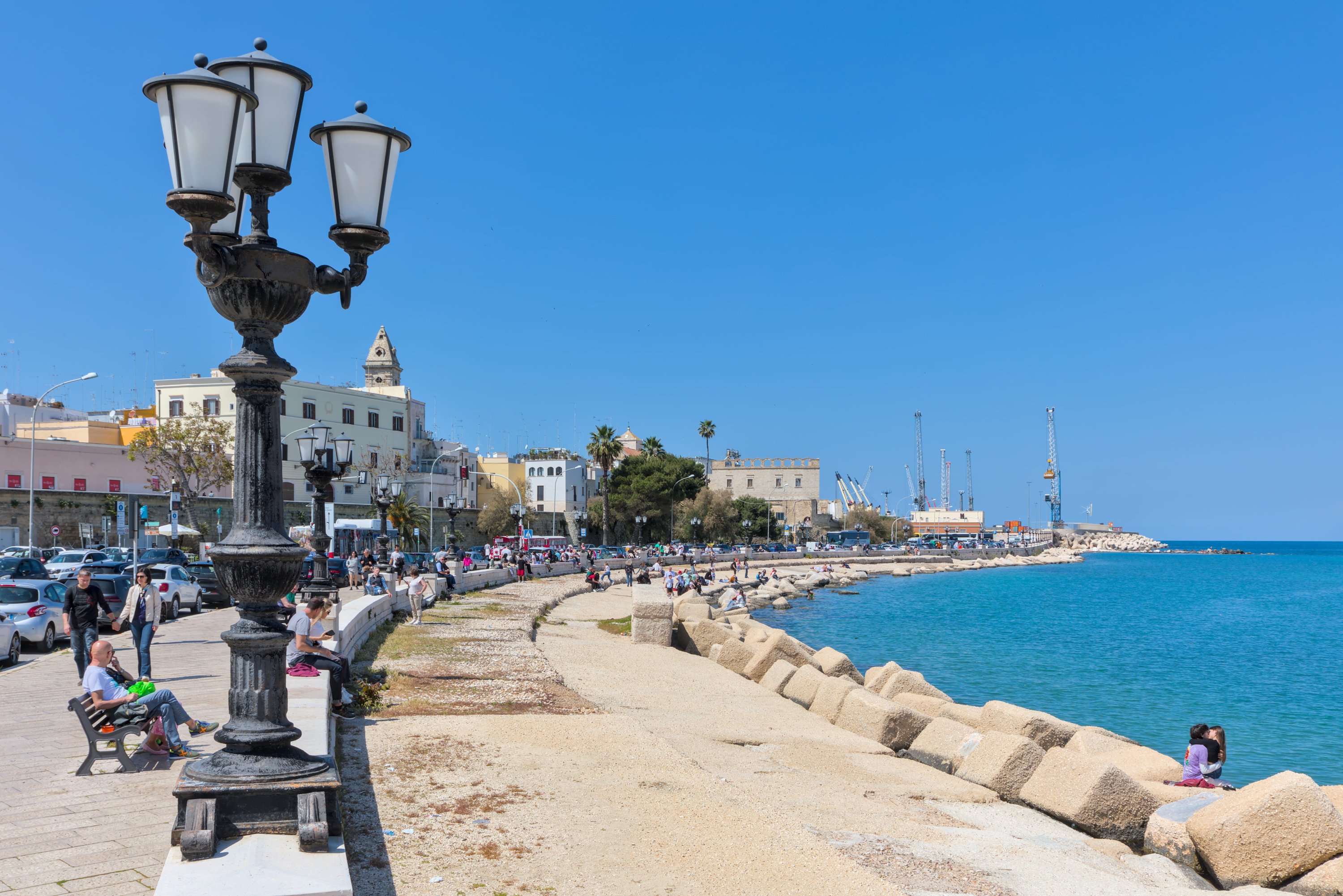
Bari, Italy

About the workshop

The recent growth of Large Language Models (LLMs) has expanded possibilities in data management, enabling powerful natural language access, reasoning, and decision support. However, reliability and trustworthiness remain major challenges when deploying LLMs in sensitive domains. Graph-based representations of knowledge and data (e.g., knowledge graphs and property graphs) provide a promising avenue to address these challenges.

LLMs generate fluent responses but often struggle with factuality, bias, hallucinations, and a lack of explainability. Graphs, on the other hand, provide structured, interconnected representations that can serve as grounding and validation layers for LLM-based systems. In this context, Semantic Web technologies offer standardized graph-based frameworks (e.g., RDF and ontologies) to formally model, link, and reason over knowledge.

Bari
October 25-26, 2026

Latest
News

  • October 15th, 2026. It has been officially announced that Anna Lisa Gentile will be the invited speaker of the workshop.

  • September 30th, 2026. The workshop program has been published on the website.

  • August 28th, 2026. Notifications have been sent to the authors. A total of 13 papers have been accepted, resulting in an acceptance rate of 43%.

  • August 20th, 2026. The PC needs a few additional days to complete the review process and make the final decisions. Therefore, the paper notification date has been postponed to August 28.

  • July 25th, 2026. The workshop has received a total of 30 submissions! Thanks to all the authors who have submitted their work.

  • July 8th, 2026. The deadline for paper submission has been extended to July 24 and for paper acceptance to August 21.

  • February 20th, 2026. The workshop has been accepted by the ISWC chairs 🎉

Submission
Guidelines

Formatting Requirements. We invite research, industry, application contributions, and software demonstration submissions. Regular papers presenting original work are solicited. Moreover, discussion papers containing descriptions of results already published are also welcomed. There are two submission formats:

  • Regular papers (up to 12 pages + references). Original research works. Regular papers must be original and not simultaneously submitted to another journal or conference.

  • Discussion papers (up to 8 pages + references). Results and ideas of interest to the workshop audience, including extended abstracts of recent authors’ publications, papers currently under submission, position papers, system and application descriptions, and presentations of preliminary results.

Paper selection will be based on originality, clarity, and technical quality. Submissions of papers must be in English, in PDF format, and formatted following the new CEUR-ART 1-column style, which is the style requested for the camera-ready preparation (Overleaf template). Accepted papers will be included in the proceedings. Proceedings will be published on CEUR-WS.org and indexed in Scopus. After acceptance, authors are required to re-submit the final PDF.

For enquiries, please email us at: glowiswc26@easychair.org.

Topics

We invite submissions that address, but are not limited to, the following themes:

  • Detection and mitigation of hallucinations, bias, and misinformation in LLMs using graph-based techniques.
  • Property graphs as a foundation for profiling, reliability, and LLM-grounded reasoning.
  • Querying property graphs with natural language interfaces powered by LLMs.
  • LLMs as assistants for constructing and validating reliable knowledge graphs.
  • Agentic AI for structured reasoning and decision-making over graph-based knowledge.
  • Semantic Web standards for grounding and verifying LLM-generated outputs.
  • Ontology-based reasoning and neuro-symbolic approaches for trustworthy LLM-driven systems.
  • Integration of Knowledge Graphs for retrieval-augmented generation and fact-checking.
  • Applications of LLMs combined with Semantic Web technologies for reliable Web-scale data management, scientific knowledge representation, and enterprise knowledge graphs.
  • Evaluation benchmarks and metrics for reliability and trustworthiness in graph-enhanced LLMs.
All submission deadlines are end-of-day in Anywhere on Earth (AoE) time zone.

Jul 24, 2026

Jul 14, 2026

Paper Submission

Aug 28, 2026

Aug 21, 2026

Paper Notification

Sep 8, 2026

Camera-ready

Oct 25, 2026

Workshop

Schedule

14:10 - 14:20 10 min
INFO

Welcome & Opening

14:20 - 15:20 60 min
Invited Speaker

Keynote Speaker - Anna Lisa Gentile

15:20 - 15:50 30 min
Research Paper Presentations (Session 1)

HANIA: Planner-Guided Multimodal Graph Evidence Selection for Grounded Question Answering

Zafar Ali, Asad Khan, Nimbeshaho Thierry, Nabila Amir, Adam A.Q. Mohammed and Pavlos Kefalas

15:20–15:30

Enhancing Biomedical Question Answering with Knowledge-Augmented Generation: an Empirical Evaluation of Med-KAG

Edouard Haddag and Lina F. Soualmia

15:30–15:40

Natural Language Questions as an Interface for Knowledge Graphs: QRAKEN Graph Distillation and Semantic Self-Healing

Remo Grillo

15:40–15:50
15:50 - 16:20 30 min
BREAK

Coffee Break

16:20 - 18:00 100 min
Research Paper Presentations (Session 2)

Evidence-Constrained NLI-Based Fact Verification with LLMs with Routed Knowledge-Graph Retrieval

Tala Aljibbaoui, Maximos Skandalis and Michael Sioutis

16:20–16:30

Knowledge Graph-Guided Multi-Hop Probing for Hallucination Detection in Large Language Models

Ushtar Ali, Steven Lynden, Akiyoshi Matono and Toshiyuki Amagasa

16:30–16:40

Provenance-Enhanced Retrieval-Augmented Generation with How-Provenance Polynomials

Zubaria Asma, Daniel Hernández and Giorgos Flouris

16:40–16:50

A Provenance-Aware Agentic Framework for Knowledge Graph Augmentation Using RDF 1.2 and SHACL

Alex Vigani, Samuel Bustamante, Nina Hosseini-Kivanani, José Emilio Labra Gayo and Anisa Rula

16:50–17:00

Exploiting Mapping Corpora and Expert Knowledge for LLM-based Schema Mapping Generation

Yannis Marketakis, Angely Buckel and Yannis Tzitzikas

17:00–17:10

Adapting WebNLG to DBpedia Evolution for Evaluating LLM-based Triple Extraction

Apostolos Baniotis, Katerina Papantoniou, Michalis Mountantonakis, Nikos Kontonasios, Iordanis Sapidis, Pavlos Fafalios, Valantis Zervos, Yannis Tzitzikas, Ruofei Lai, Amela Fejza, Shriram Piramanayagam, Pavlos Vougiouklis and Jeff Z. Pan

17:10–17:20

TSE-Bridge: Connecting Industrial Time-Series Events with Semantic Maintenance Evidence through Traceable Graph Relations

Yihao Peng

17:20–17:30

Graph-Grounded Multimodal Agent for Trustworthy Power-Line Operations and Maintenance

Sania Verma, Joyjit Chatterjee, Jing Guo, Akash Marar, Rajendra Shankaran, Garima Sharma, Zekun Guo and Anu Mehra

17:30–17:40

Separating Grounding from Verification: Property-Graph-Backed Generation and Independent Claim Checking for Trustworthy LLM Recommendations

Rafał Maciejewski and Robert Kłopotek

17:40–17:50

Graph-Grounded Agentic Search for Biodiversity e-Infrastructures: Combining LLMs and Semantic Web Technologies in LifeWatch ERIC

Lucia Vaira, Nikos Minadakis, Ilaria Rosati, Eftychia Tzafesta, Martina Pulieri, Houda Ben Salah and Alberto Basset

17:50–18:00

Organizers

Speaker

Gianluca Bonifazi

Assistant Professor Marche Polytechnic University g.bonifazi@univpm.it
Speaker

Stefano Cirillo

Assistant Professor University of Salerno scirillo@unisa.it
Speaker

Eliana Pastor

Assistant Professor Polytechnic University of Turin eliana.pastor@polito.it
Speaker

Luca Virgili

Assistant Professor Marche Polytechnic University luca.virgili@univpm.it

Program Committee

  • Alessia Antelmi - University of Turin
  • Sajid Anwar - Institute of Management Sciences Peshawar Pakistan
  • Marco Arazzi - University of Pavia
  • Francesca Bugiotti - Paris-Saclay University
  • Francesco Cauteruccio - University of Salerno
  • Gaetano Cimino - University of Salerno
  • Domenico Desiato - University of Bari Aldo Moro
  • Stefania Dumbrava - TĂ©lĂ©com SudPari
  • Lisa Ehrlinger - Hasso Plattner Institute
  • Alberto GarcĂ­a S. - Universitat Politècnica de València
  • Flavio Giobergia - Polytechnic University of Turin
  • Gianpaolo Iuliano - University of Salerno
  • Weiwei Jiang - Beijing University of Posts and Telecommunications
  • Andrea Mauri - University of Lyon I
  • Vincenzo Moscato - University of Naples "Federico II"
  • Matteo Paganelli - University of Modena and Reggio Emilia
  • Vincenzo Pasquadibisceglie - University of Bari Aldo Moro
  • Maria Angela Pellegrino - University of Salerno
  • Francesco Pugnaloni - Hasso Plattner Institute
  • Georgia Troullinou - CNRS - Univ. Grenoble Alpes
  • Gerardo Vitagliano - MIT CSAIL
  • Luca Zecchini - BIFOLD & TU Berlin
  • Zhiqiang Zhong - University of Luxembourg
  • Andrea Zingoni - University of Tuscia